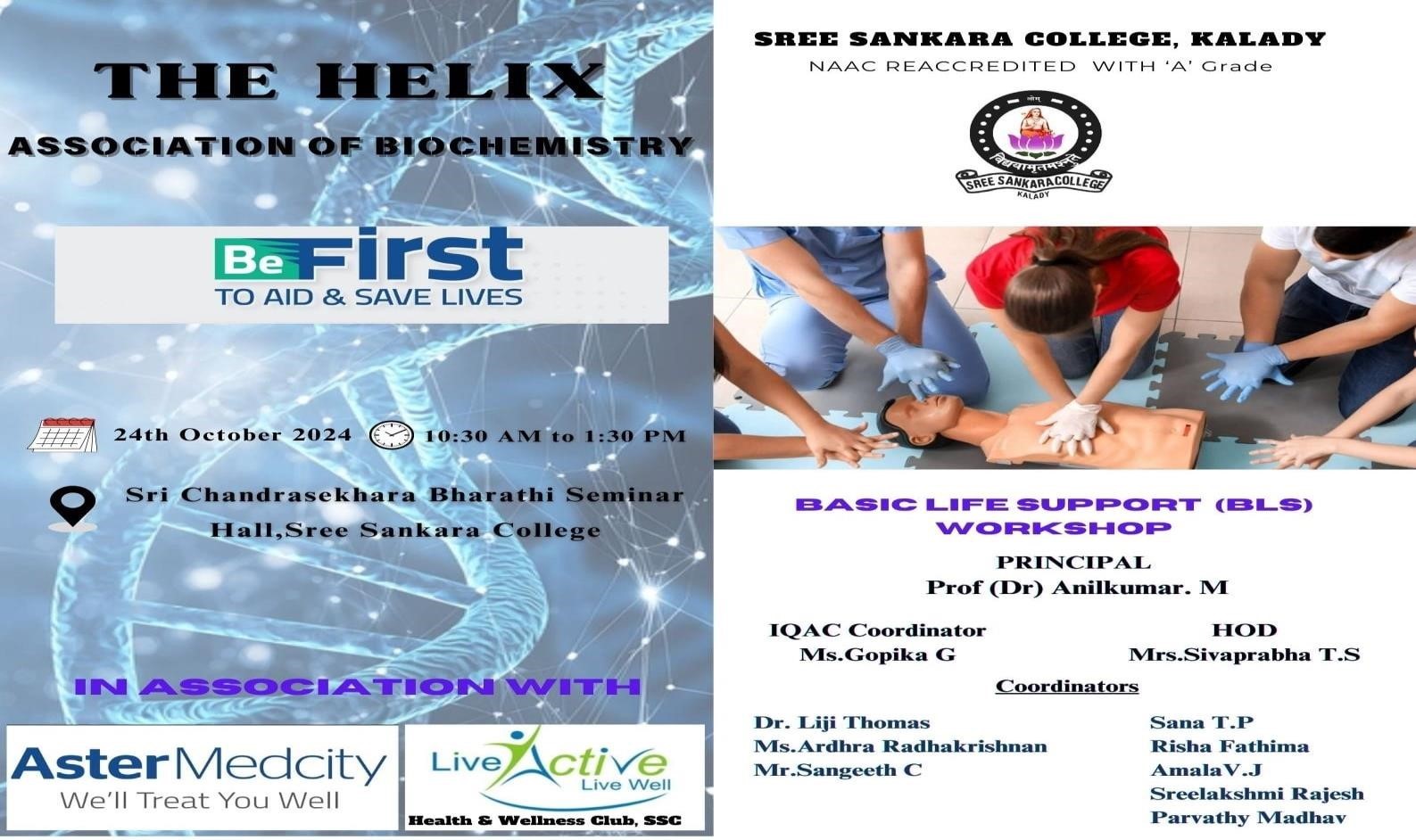
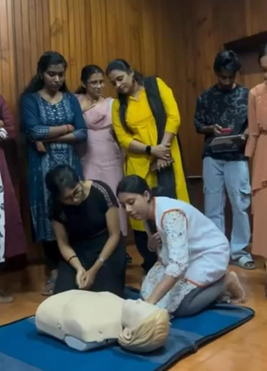
The Biochemistry Department Association, The Helix, in collaboration with the Health and Wellness Club, successfully conducted a Basic Life Support (BLS) workshop aimed at equipping students and faculty with essential life-saving skills. The workshop provided participants with both theoretical knowledge and hands-on training to effectively respond to cardiac and respiratory emergencies. Around 116 participants from various departments attended the programme and actively engaged in the demonstrations and practical sessions. The event concluded with discussions and a question-and-answer session, leaving participants empowered with the confidence and competence to manage emergencies.
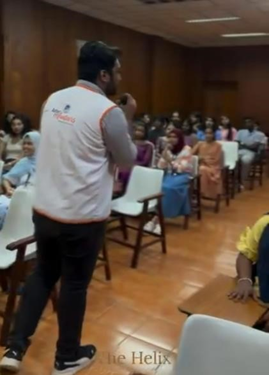
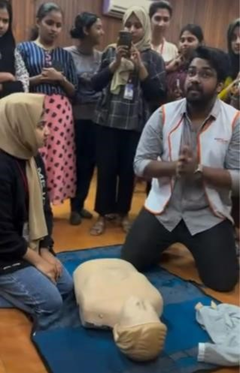
The workshop was led by the Aster Medicity team, including Dr. Bharat Sajith, Emergency Medicine Specialist; Dr. Catherine, Medical Expert; Mr. Anish, Emergency Medical Technician (EMT); and Ms. Irfana Nezrin, Workshop Coordinator. The session was well-structured and interactive, covering the importance of immediate first aid and timely life-saving interventions. The speakers provided detailed guidance on Basic Life Support techniques, including cardiopulmonary resuscitation (CPR) and airway management, along with the recognition and response to cardiac and respiratory emergencies. Hands-on demonstrations using mannequins, followed by supervised practice sessions, allowed participants to apply what they learned in a practical setting. The experts also shared useful tips to ensure the safe and effective application of these skills in real-life situations.
The programme emphasized the importance of being prepared to act promptly during medical emergencies and highlighted the social responsibility associated with life-saving knowledge. It encouraged participants to develop awareness, confidence, and a proactive approach towards community health and safety. The hands-on learning experience played a crucial role in strengthening practical skills and bridging the gap between theoretical understanding and real-world application.
The interactive segment of the workshop witnessed enthusiastic participation, with attendees clarifying doubts related to techniques and emergency scenarios. Participants were allowed to practice BLS procedures under expert supervision, ask scenario-based questions, and receive personalized feedback to improve their proficiency. This engaging session ensured that participants not only gained knowledge but also developed the confidence and ability to respond effectively in emergencies. Overall, the workshop proved to be highly informative and impactful, promoting health awareness and equipping individuals with essential skills that can help save lives.