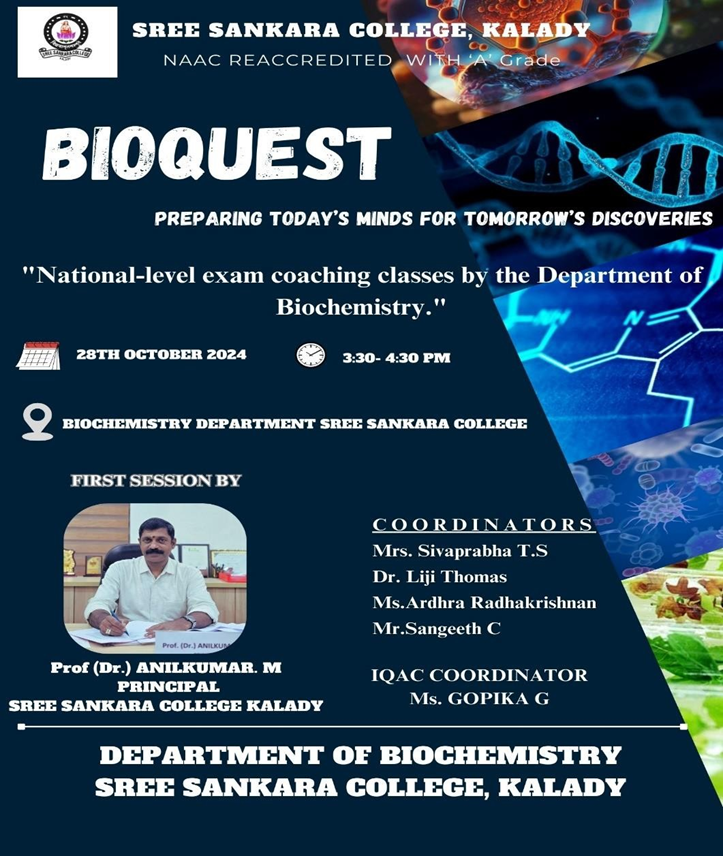
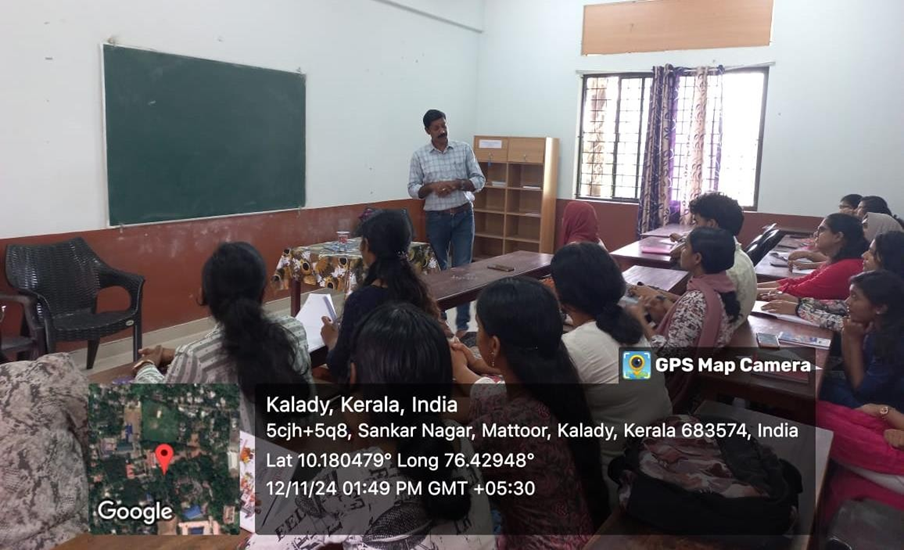
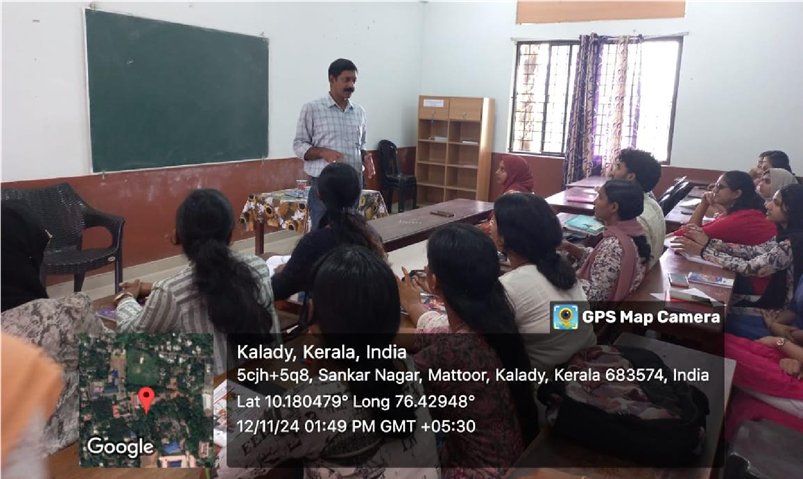
The Department of Biochemistry organized “Bioquest” – Preparing Today’s Mind for Tomorrow’s Discoveries on 12th November 2024. The programme focused on the importance of structured preparation and consistent practice for achieving success in competitive examinations. It highlighted problem-solving approaches in genetics, enabling students to apply theoretical knowledge to practical questions commonly encountered in CSIR-NET. Faculty members guided participants in analyzing questions, applying logical reasoning, and developing effective problem-solving strategies. The session concluded with an emphasis on systematic preparation and the effective use of available academic resources, with the Principal encouraging students to make the best use of the guidance provided.
The programme was led by Principal Prof. Dr. Anilkumar M. along with the Biochemistry faculty of Sree Sankara College. The session provided conceptual clarity in genetics and other core CSIR-NET topics, along with step-by-step demonstrations of problem-solving techniques using practice questions. Strategies for exam preparation, including time management and prioritization, were discussed in detail. The session also offered motivation and guidance, emphasizing the importance of consistency, discipline, and structured study plans. The presentations were highly interactive, with faculty members demonstrating methods to approach complex questions while encouraging analytical thinking among students.
Key aspects of the programme included a strong focus on exam-oriented preparation for CSIR-NET and other national-level examinations, enhancement of analytical and problem-solving skills through genetics-based exercises, and reinforcement of core biochemistry concepts. Emphasis was also placed on structured learning through proper planning, effective time management, and optimal resource utilization, along with continuous motivation to build self-discipline and exam readiness.
The session also included an interactive component with hands-on problem-solving exercises. Students actively engaged in analyzing genetics questions under faculty guidance, discussed multiple approaches to solving complex problems, and clarified doubts related to exam strategies and preparation challenges. They also received personalized feedback aimed at improving accuracy and efficiency. This interactive approach ensured active participation and strengthened the practical understanding of key concepts.